
Recent Posts
- Weighted Sleep Masks: Filling Materials, Design and Market Trends
- Mattress Pad vs. Mattress Topper: Differences Buyers Should Know
- Hotel Bedding Procurement: Specifications That Actually Matter
- Private Label Bedding: A Practical Starter Guide for New Brands
- Vacuum Packing Bedding for Sea Freight: Benefits, Limits and Costs

Related posts
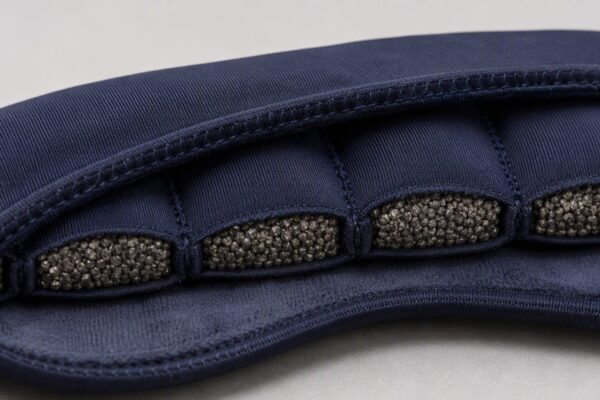
Weighted Sleep Masks: Filling Materials, Design and Market Trends
Why weighted sleep masks are growing: filling materials, weight ranges, fabric choices and design trends from an OEM sleep accessories manufacturer.
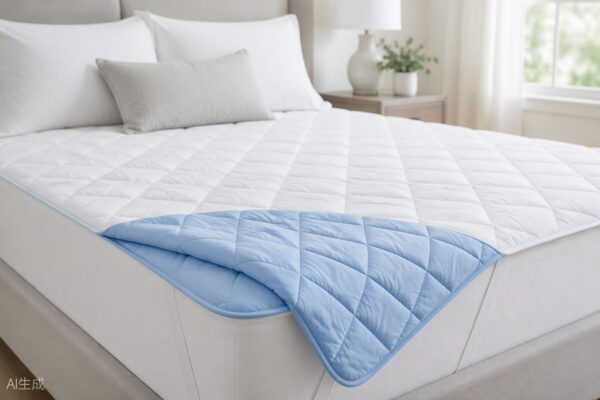
Mattress Pad vs. Mattress Topper: Differences Buyers Should Know
Mattress pad vs. topper: construction, function, materials, sizing and price points compared, so buyers can spec the right product for their market.
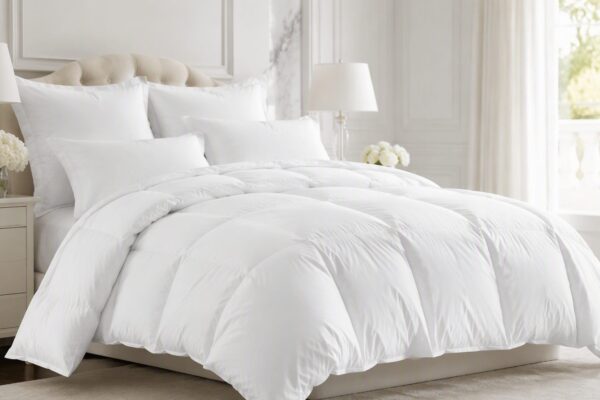
Hotel Bedding Procurement: Specifications That Actually Matter
Which specifications matter most when buying hotel bedding in bulk: fabric, fill weight, sizes, wash durability, labeling and reorder consistency.
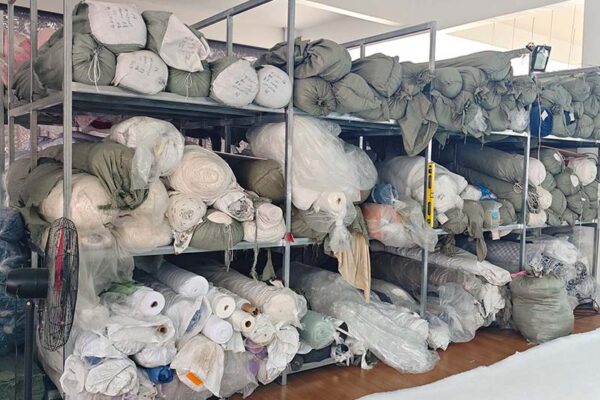
Private Label Bedding: A Practical Starter Guide for New Brands
How to start a private label bedding line with a China factory: labels, packaging, MOQ, sampling and costs explained for first-time brand owners.
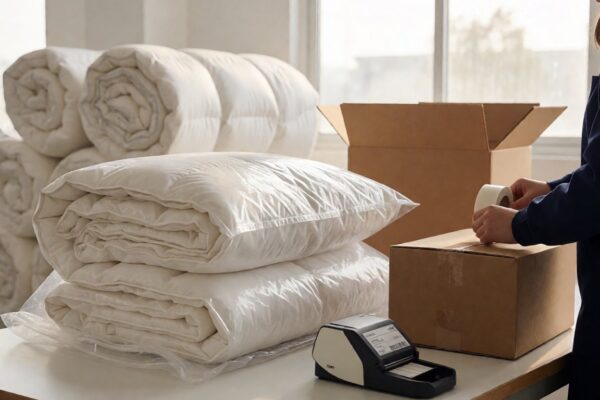
Vacuum Packing Bedding for Sea Freight: Benefits, Limits and Costs
When vacuum packing makes sense for sea-freight bedding: volume savings, product limits, recovery time, carton specs and cost. Notes from an OEM factory.
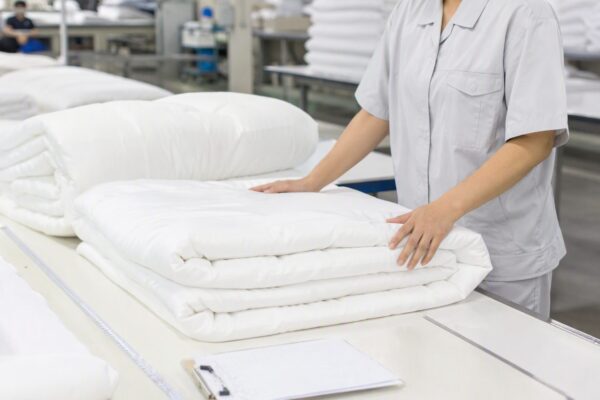
Needle Detection and Quality Control in Filled Bedding Production
How needle detection, in-process checks and final inspection work in filled bedding production, and what to confirm with your factory before bulk orders.
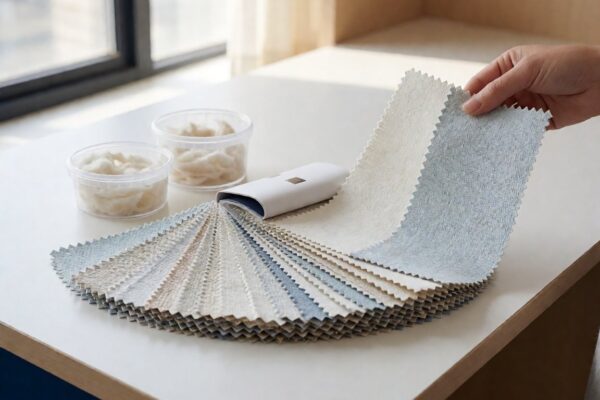
The Bedding Sampling Process: From Tech Pack to Approved Sample
How bedding sampling works at an OEM factory: what to send, sample cost and courier, revision rounds, and how projects reach approval in about 7 days.

How MOQ Works in Bedding Manufacturing (and How to Negotiate It)
Why bedding factories set MOQs, what drives them up or down, and realistic ways to negotiate a lower trial order. Typical OEM MOQ is around 300 pieces.
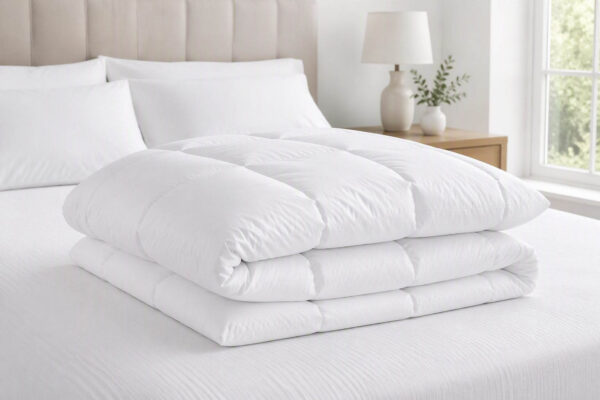
Down Alternative vs. Down: How to Choose the Right Fill for Your Product Line
Down alternative vs. down comforters compared on warmth, cost, care, sourcing and labeling rules, so you can pick the right fill for your product line.
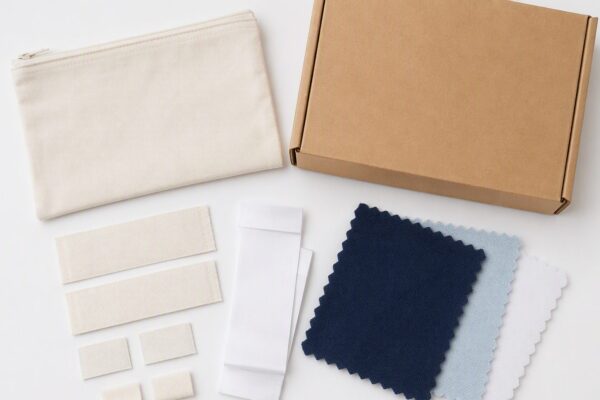
Weighted Blanket OEM: What Your Factory Needs Before Quoting
What a weighted blanket OEM factory needs before quoting: weight range, bead type, grid size, fabric, layers and packaging, plus MOQ and lead times.
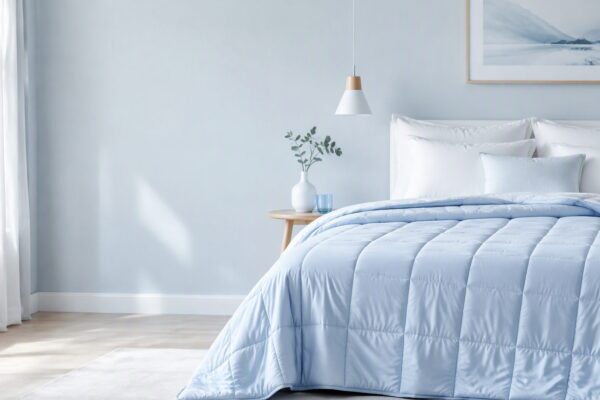
Cooling Comforter Materials Compared: Q-Max Nylon, Cotton, Bamboo and PCM
Q-Max nylon, cotton, bamboo and PCM fabrics compared for cooling comforters: feel, cost, MOQ impact and wash performance. From an OEM factory.
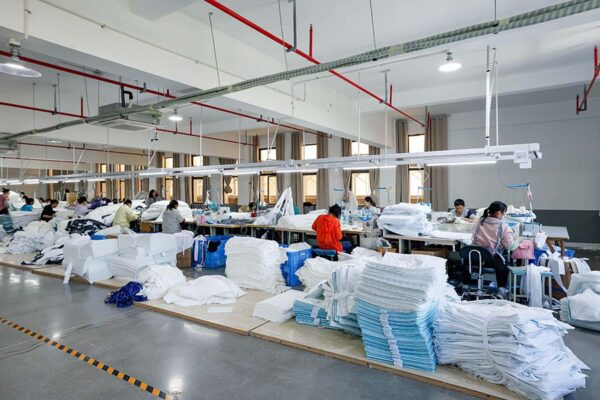
How to Source Bedding from China: A Buyer’s Step-by-Step Process
A step-by-step process for sourcing bedding from China: shortlisting factories, tech packs, sampling, MOQ, QC and shipping. From an OEM factory.